P_E_T_E_R
Aktives Mitglied
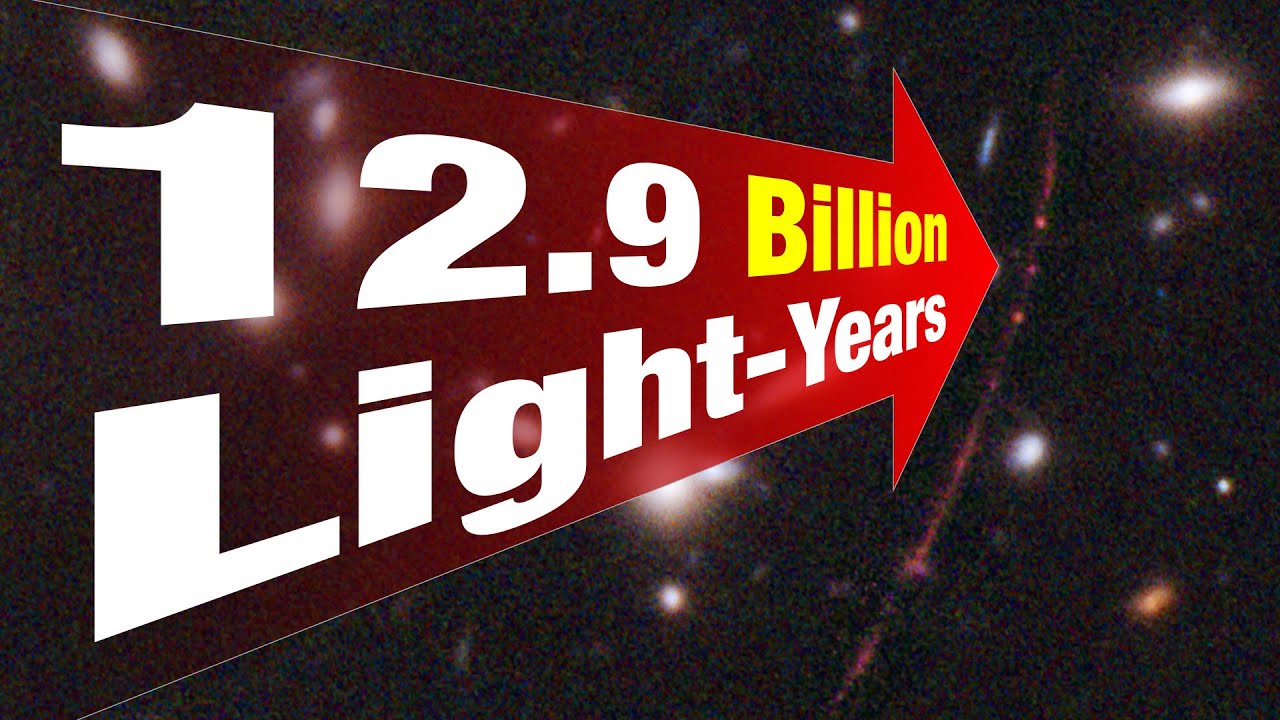
Sichtbar nur durch extremen Gravitationslinseneffekt: ein Stern in einer Lichtlaufzeitentfernung von 12,9 Milliarden Lj.
Dabei wird die Abbildung wie durch einen Zerrspiegel verformt:
A highly magnified star at redshift 6.2
Galaxy clusters magnify background objects through strong gravitational lensing. Typical magnifications for lensed galaxies are factors of a few but can also be as high as tens or hundreds, stretching galaxies into giant arcs. Individual stars can attain even higher magnifications given fortuitous alignment with the lensing cluster.
Here we report observations of a more distant and persistent magnified star at a redshift of 6.2 ± 0.1, 900 million years after the Big Bang. This star is magnified by a factor of thousands by the foreground galaxy cluster lens WHL0137–08 (redshift 0.566), as estimated by four independent lens models. The delensed absolute UV magnitude, −10 ± 2, is consistent with a star of mass greater than 50 times the mass of the Sun.
Record Broken: Hubble Spots Farthest Star Ever Seen

Credits: Science: NASA, ESA, Brian Welch (JHU), Dan Coe (STScI); Image processing: NASA, ESA, Alyssa Pagan (STScI)
YouTube
MEET EARENDEL (*), THE MOST DISTANT STAR ASTRONOMERS HAVE OBSERVED
(*) Tolkien fans may recognize this name, though spelled slightly differently as Eärendil, the half-elf mariner who carried a heavenly jewel into the sky in The Silmarillion. The nature of Éarendel is debated but it is commonly identified as the “morning star.”
Dabei wird die Abbildung wie durch einen Zerrspiegel verformt:
A highly magnified star at redshift 6.2
Galaxy clusters magnify background objects through strong gravitational lensing. Typical magnifications for lensed galaxies are factors of a few but can also be as high as tens or hundreds, stretching galaxies into giant arcs. Individual stars can attain even higher magnifications given fortuitous alignment with the lensing cluster.
Here we report observations of a more distant and persistent magnified star at a redshift of 6.2 ± 0.1, 900 million years after the Big Bang. This star is magnified by a factor of thousands by the foreground galaxy cluster lens WHL0137–08 (redshift 0.566), as estimated by four independent lens models. The delensed absolute UV magnitude, −10 ± 2, is consistent with a star of mass greater than 50 times the mass of the Sun.
Record Broken: Hubble Spots Farthest Star Ever Seen
Credits: Science: NASA, ESA, Brian Welch (JHU), Dan Coe (STScI); Image processing: NASA, ESA, Alyssa Pagan (STScI)
YouTube
MEET EARENDEL (*), THE MOST DISTANT STAR ASTRONOMERS HAVE OBSERVED
(*) Tolkien fans may recognize this name, though spelled slightly differently as Eärendil, the half-elf mariner who carried a heavenly jewel into the sky in The Silmarillion. The nature of Éarendel is debated but it is commonly identified as the “morning star.”