
P_E_T_E_R
Aktives Mitglied
Das berümte Bild von Van Gogh mit dem Titel Sternennacht oder The Starry Night wurde schon vielfach interpretiert. Wegen der scheinbar übertrieben groß dargestellten Sterne wurde dabei häufig gemutmaßt, es handele sich dabei wohl nicht um eine realistische Darstellung des Sternenhimmels aufgrund einer konkreten Beobachtung, sondern um eine abstrakte Darstellung. Zu dieser Einschätzung kamen bislang auch vergebliche Versuche, das Datum der dargestellten Szene auf der Basis von brieflichen Aufzeichnungen, welche den 19. Juni 1889 nahelegten, in Einklang mit der für dieses Datum erwarteten Position der Venus und der Mondphase zu bringen.
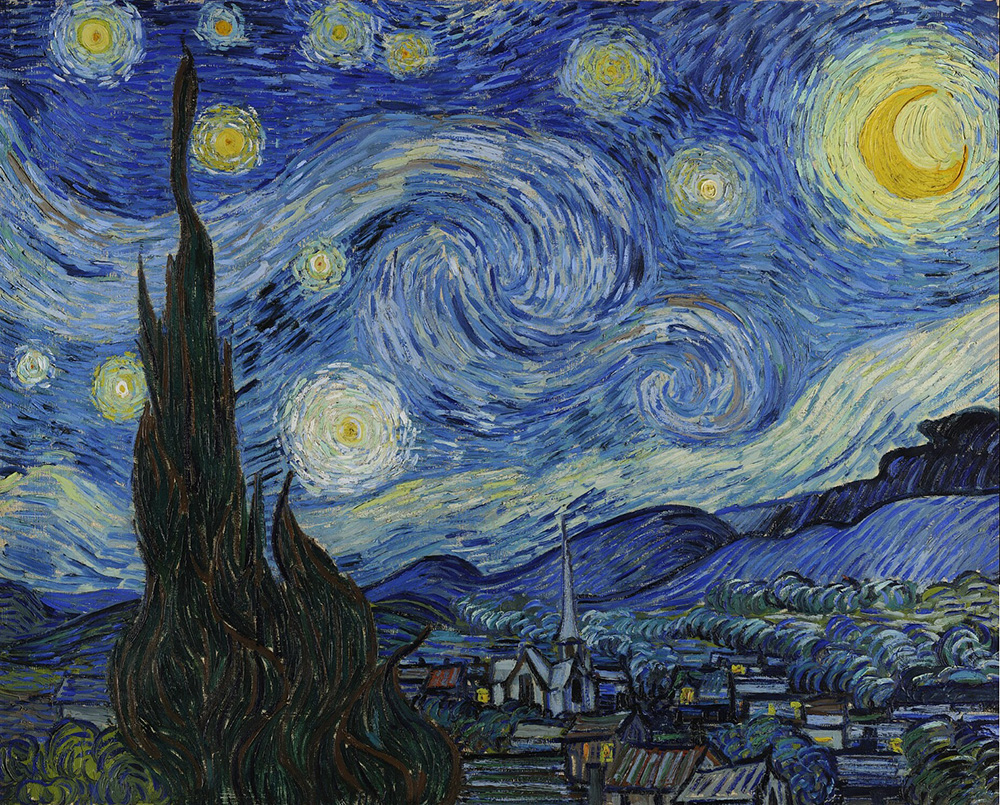
Sternennacht (Wikipedia)
Jetzt haben zwei koreanische Sternfreunde die dokumentarische und die astronomische Evidenz noch mal akribisch untersucht. Sie kommen dabei zu dem Ergebnis, dass die Szene mit Venus und der dargestellten Mondphase an den Hyaden sehr wohl passen würde, aber erst für den 22. Juli 1889, also gut einen Monat später als bislang angenommen:
The actual sky of Van Gogh’s Starry Night: a multidisciplinary reconstruction
The Starry Night: whether its sky represents spontaneous fantasy or a realist depiction has gone unanswered for over a century. Earlier astronomical readings, constrained by the conventional June dating, reached mutually exclusive conclusions, and the painting’s celestial arrangement was never quantitatively tested. In contrast, this study narrows the dates on which the Moon and Venus fall within the painter’s field of view, confirms that selection by Procrustes fitting of the asterism, and cross-checks it against meteorological and bioclimatic records and the original letters. The painter’s narrow frame, recovered from an earlier sketch of the same terrain, is then applied to the 1889 sky. At dawn around 22 July 1889, the waning-crescent Moon, Venus, and the Hyades cluster gather within that narrow frame, while the asterism’s geometry, contemporary weather records, and the letters independently converge on the same date. These findings suggest that the night sky in The Starry Night originated from observation of a specific celestial arrangement, and call for reconsidering the June dating.
Gruß, Peter