Roman Space Telescope

P_E_T_E_R

Aktives Mitglied
Roman Space Telescope? Nein, die alten Römer haben keins gebaut, also kein verspäteter Aprilscherz, wie man denken könnte.

Es geht hier tatsächlich um ein weiteres großes Raumteleskop, das die NASA nun mit aller Macht vorantreibt, nämlich das

Roman Space Telescope

Wie auch hier berichtet, in seiner früheren Inkarnation bekannt als Wide Field Infrared Survey Telescope (WFIRST), wurde es nach einer wechselhaften Phase von Streichungen und Wiederbelebungen schließlich doch genehmigt und vor einem Jahr auf den Namen einer in NASA-Kreisen besonders angesehenen Persönlichkeit umgetauft: Nancy Grace Roman

Das Roman Space Telescope (RST) wird wie auch sein wohlbekannter Vorgänger, das Hubble Space Telescope (HST), einen 2,4 m großen Primärspiegel haben. Allerdings in einer wesentlich schnelleren f/7.9 optischen Konfiguration und mit sehr viel größerem Feld als Three Mirror Anastigmat. Das Teleskop soll 2025 zum L2 Lagrange-Punkt gebracht werden und dort wenigstens fünf Jahre lang forschen. Und worum geht es da? Vor allem um folgende Themen
  • Dark Energy
  • Exoplaneten
Dark Energy, also die beschleunigte Expansion des Raumes, will man mit drei verschiedenen Methoden untersuchen:
Exoplaneten will man einmal wie bei Kepler und TESS mit der Transitmethode untersuchen, zum anderen aber auch über Gavitational Microlensing, und sogar mit Direct Imaging.

Dafür plant man zwei wesentliche Instrumente einzusetzen:
  • Eine 300 megapixel Kamera mit HgCdTe Technologie mit einer Pixelauflösung von 0,1" für den Spektralbereich 0,49 - 2,0 μm
  • Einen Koronografen zur Unterdrückung von primärem Sternlicht auf 1/10^9
Das Projekt war zunächst für einen erheblich kleineren Primärspiegel geplant, bekam dann 2012 aber einen wesentlichen Schub, als das National Reconnaissance Office (NRO) der NASA zwei überzählige Spiegel im Format von 2,4 m "spendete". Immerhin weiß man seitdem, was für kolossale Optiken in den geheimen Spionagesatelliten stecken. Der NASA Kontrakt für die Teleskopoptik ging vor zwei Jahren an die Harris Corporation in Rochester, NY. Auch ESA, JAXA, CNES und DLR sind an einer Zusammenarbeit interessiert.

Roman page at Goddard Space Flight Center

NASA's Roman mission predicted to find 100,000 transiting planets
 
Ground system for NASA's Roman Space Telescope moves into development

On July 23rd, the Roman Space Telescope successfully completed the critical design review of the mission's ground systems, which are spread over multiple institutions including the Space Telescope Science Institute (STScI) in Baltimore, Maryland; NASA's Goddard Space Flight Center in Greenbelt, Maryland; and Caltech/IPAC in Pasadena.

The mission will now proceed to the next phase: building and testing the newly designed systems that will enable planning and scheduling of Roman observations and managing the resulting data, anticipated to be over 20 petabytes (20,000,000 GB) within the first five years of operations.

Roman will be able to capture an area over 100 times larger than Hubble in a single snapshot. This will give it the unique ability to do wide-field surveys at space-based resolution, which will be the observatory's primary operating mode.
 
Inzwischen wurde die noch leere Endstruktur vom Teleskop, in dem die Service Module montiert werden, in einen großen Reinraum am Goddard Space Flight Center gebracht. Misst 4,3 x 3,7 x 2 m³ und wiegt 1,6 t ohne Beladung. Bis zum vorgesehenen Start im Mai 2027 hat man noch 4 Jahre.

Framework for NASA's Roman spacecraft moves to Goddard clean room

Roman-framework.jpg

Credit: NASA/Jolearra Tshiteya
 
Mittlerweile ist auch das bei L3Harris Technologies in Rochester, New York, gebaute Roman Space Telescope mit seinem 2,4-m Primärspiegel bei Goddard eingetroffen:

Telescope for NASA’s Roman Mission Complete, Delivered to Goddard

Roman_1.jpg

NASA/Chris Gunn

Roman.jpg

NASA/Chris Gunn

As of May 2024, Roman is scheduled to be launched on a Falcon Heavy rocket under a contract specifying readiness by October 2026 supporting a NASA launch commitment of May 2027.

Damit soll das Teleskop dann in einen Halo-Orbit am L2-Lagrange Punkt von Erde und Sonne gebracht werden und dort mindestens fünf Jahre lang beobachten und Daten sammeln.

Gruß, Peter
 
Lange nichts mehr gehört vom Nancy Grace Roman Space Telescope, zumal es auf der Abschussliste von Trump stand.

Aber Totgesagte leben bekanntlich länger und allen Unkenrufen zum Trotz wurde es jetzt fertiggestellt:

The Nancy Grace Roman Telescope is complete

The telescope will undergo thorough testing before moving to the Kennedy Space Center in Florida to prepare for launch. The scheduled launch date is May 2027, when a SpaceX Falcon Heavy is set to lift it into space and send it on its way to orbit the sun–Earth L2 point. But the telescope could be ready by Fall 2026, and if it is, that would be a noteworthy accomplishment.

NASA Roman Space Telescope.jpg

NASA


Gruß, Peter
 
Zuletzt bearbeitet:
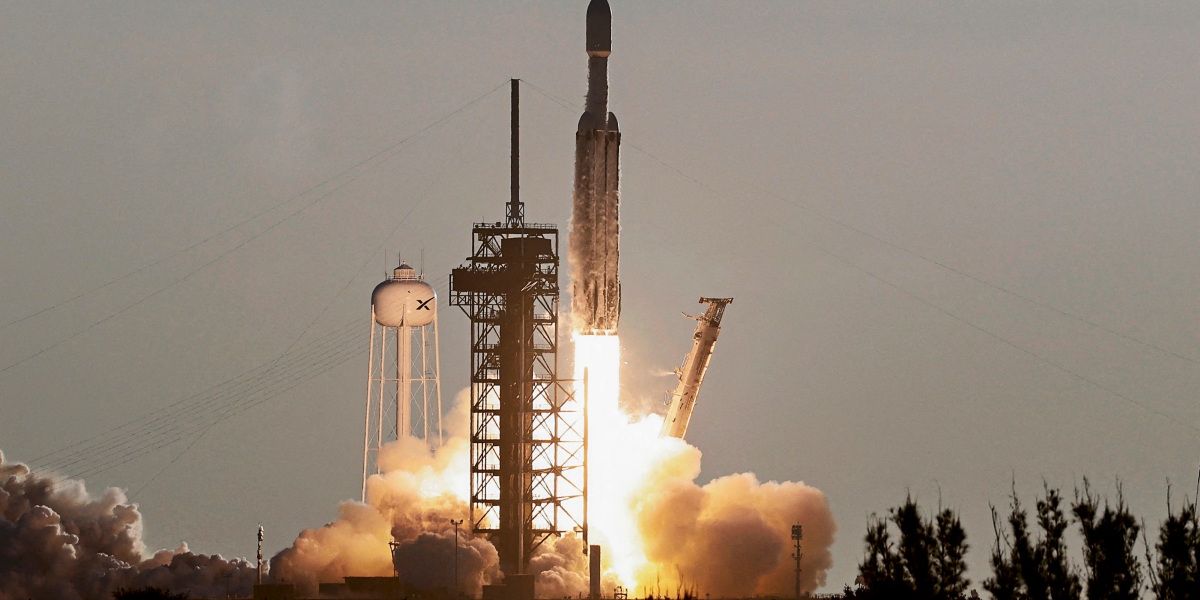
Das Roman Space Telescope (RST) als erklärtes Topprojekt der professionellen Astronomen war trotz guter Fortschritte schon mehrmals auf der Abschussliste von Trump. Gleichwohl steht das RST allen Unkenrufen zum Trotz nun für den Start am kommenden Sonntag bereit:

NASA Sets Coverage for Roman Space Telescope Launch from Florida

NASA and SpaceX are targeting Roman’s liftoff for no earlier than 7:26 a.m. EDT Sunday, Aug. 30, aboard a SpaceX Falcon Heavy rocket from Launch Complex 39A at the agency’s Kennedy Space Center in Florida. Launch coverage begins at 6:20 a.m.

Live coverage of these events will stream through a variety of platforms. Learn where to watch online:


https://www.nasa.gov/live

Mit einer Öffnung wie Hubble von 2,4 m, aber einem hundert mal größeren Feld sollte RST eigentlich schon 2016 starten.

Also wieder mal "better late than never" ...

Gruß, Peter
 
Zuletzt bearbeitet:
Hier ist noch ein aktueller Artikel in der New York Times, der die hervorragende Bedeutung von Raumteleskopen im allgemeinen und vom RST im besonderen betont:

The Roman Telescope Promises a New Era of Cosmic Exploration

NASA began experimenting with orbiting astronomical observatories alongside its Apollo program in the 1960s, and by the end of the next decade, Congress had approved funding for what would become known as the Hubble Space Telescope. That was in large part due to efforts by Nancy Grace Roman, NASA’s first chief astronomer, who played a pivotal role in building out the agency’s space astronomy program.
In 1990, NASA launched the Hubble. Then came the Compton Gamma Ray Observatory in 1991, the Chandra X-ray Observatory in 1999 and the Spitzer Space Telescope in 2003. NASA’s Great Observatories became precursors for a suite of other telescopes launched by the agency, including Kepler, which pushed the number of known exoplanets into the thousands, and James Webb, which has peered back to nearly the beginning of time.

Gruß, Peter
 
Zurück
Oben