Mars Science Laboratory

Status
Es sind keine weiteren Antworten möglich.
Hi,

scheinbar oder anscheinend?

FG Theodor
 
Der Rover kommt wieder in die Gänge:

In der kommenden Woche soll der Rover wieder voll einsatzfähig sein.

Bei der Wiederherstellung mache man gute Fortschritte, erklärte Projektmanager Richard Cook. Noch seien aber einige Schritte nötig, so müsse der nun aktive Computer über den Zustand des Rovers informiert werden, beispielsweise darüber, wo genau sich der Arm befindet. Gleichzeitig arbeite man daran den ersten Computer wiederherzustellen, um ihn dann als Backup verwenden zu können.

Allerdings:
Der Grund für die Speicherfehler sei auch noch nicht gefunden.

Quelle:
Mars: Systeme von Curiosity wieder hochgefahren
 
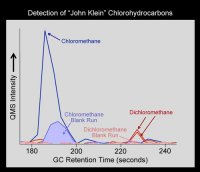
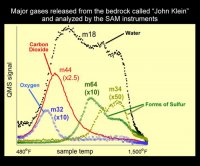
Die Ergebnisse der Bohrprobenanalyse liegen jetzt vor:

NASA Rover Finds Conditions Once Suited For Ancient Life On Mars

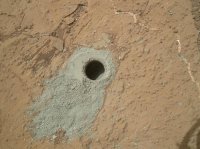
PASADENA, Calif. -- An analysis of a rock sample collected by NASA's Curiosity rover shows ancient Mars could have supported living microbes. Scientists identified sulfur, nitrogen, hydrogen, oxygen, phosphorus and carbon -- some of the key chemical ingredients for life -- in the powder Curiosity drilled out of a sedimentary rock near an ancient stream bed in Gale Crater on the Red Planet last month.

Clues to this habitable environment come from data returned by the rover's Sample Analysis at Mars (SAM) and Chemistry and Mineralogy (CheMin) instruments. The data indicate the Yellowknife Bay area the rover is exploring was the end of an ancient river system or an intermittently wet lake bed that could have provided chemical energy and other favorable conditions for microbes. The rock is made up of a fine-grained mudstone containing clay minerals, sulfate minerals and other chemicals. This ancient wet environment, unlike some others on Mars, was not harshly oxidizing, acidic or extremely salty.

Gasanalyse (I)

Gasanalyse (II)

Sky & Telescope - Habitable Oasis on Mars?

Spiegel - Nasa-Analyse: Auf dem Mars war Leben möglich

Gesteins-Analyse des Rovers "Curiosity" lässt nach Angaben der US-Raumfahrtbehörde Nasa den Schluss zu, dass auf dem Mars einst mikrobielles Leben möglich war. In der Probe fand der Forschungsroboter mit Hilfe seiner Messinstrumente nach Nasa-Angaben unter anderem Spuren von Schwefel, Stickstoff, Phosphor und Kohlenstoff - alles chemische Stoffe, die bei der Entstehung von Leben eine wichtige Rolle spielen.

Image Credit: NASA/JPL-Caltech
 

Anhänge

  • gas_analysiy_I_pia16836-br2.jpg
    gas_analysiy_I_pia16836-br2.jpg
    74 KB · Aufrufe: 1.287
  • gas_analysis_II_pia16835-br2.jpg
    gas_analysis_II_pia16835-br2.jpg
    97,6 KB · Aufrufe: 1.236
Jetzt gibt's ein Panoramabild von Aeolis Mons alias Mt. Sharp

Panorama in White-Balanced Colors

This mosaic of images from the Mast Camera (Mastcam) on NASA's Mars rover Curiosity shows Mount Sharp in a white-balanced color adjustment that makes the sky look overly blue but shows the terrain as if under Earth-like lighting.

Mount Sharp, also called Aeolis Mons, is a layered mound in the center of Mars' Gale Crater, rising more than 5 kilometers above the crater floor, where Curiosity has been working since the rover's landing in August 2012.

This mosaic was assembled from dozens of images from the 100-millimeter-focal-length telephoto lens camera mounted on the right side of the Mastcam instrument.


Image Credit: NASA/JPL-Caltech/MSSS

Wegen des ungewöhnlichen Formats ist die Darstellung etwas schwierig ...
 

Anhänge

  • PIA16768.jpg
    PIA16768.jpg
    44,9 KB · Aufrufe: 1.066
  • PIA16768_v2.jpg
    PIA16768_v2.jpg
    98,8 KB · Aufrufe: 1.093
Danke für das Update!
Immer wenn ich solche Bilder vom Mars sehe, muss ich an "Tatooine" denken. Hoffentlich lassen die Jawas den Rover in Ruhe :totlach:
 
Hallo,

ich mag diese Weiß abgeglichenen Bilder mit blauem Himmel ja überhaupt nicht. Da geht für mich der ganze Charme eines Fotos vom Mars verloren.

So sieht der Berg ohne diese Bearbeitung aus:

Mount Sharp in natürlichen Farben

Ich weiß zwar das man das aus wissenschaftlichen Gründen macht, um Gesteinsmaterial besser mit Material von der Erde vergleichen zu können, aber solche Bilder sehen für mich dann rein ästhetisch etwas zu gewöhnlich aus.
 
Hi,

finde ich auch schöner... Für Bergsteiger sollte der Hügel keine Herausforderung sein.

BG Theodor
 
Er ist nur schlappe fünf Kilometer hoch.
Aber steil sieht er nicht aus.
Mit genug Sauerstoff in der Flasche kein Problem... ;)

Gruss
Thorsten
 
Mars hinter der Sonne im April

Mars will be passing almost directly behind the sun, from Earth's perspective. The sun can easily disrupt radio transmissions between the two planets during that near-alignment. To prevent an impaired command from reaching an orbiter or rover, mission controllers at NASA's Jet Propulsion Laboratory, Pasadena, Calif., are preparing to suspend sending any commands to spacecraft at Mars for weeks in April. Transmissions from Mars to Earth will also be reduced.

This year, the apparent angle between Mars and the sun will slim to 0.4 degree on April 17. Transmissions from Earth to the orbiters will be suspended while Mars and the sun are two degrees or less apart in the sky, from April 9 to 26, with restricted commanding during additional days before and after. Both orbiters will continue science observations on a reduced basis compared to usual operations. Both will receive and record data from the rovers. Odyssey will continue transmissions Earthward throughout April, although engineers anticipate some data dropouts, and the recorded data will be retransmitted later.

The Mars Reconnaissance Orbiter will go into a record-only mode on April 4. "For the entire conjunction period, we'll just be storing data on board," said Deputy Mission Manager Reid Thomas of JPL. He anticipates that the orbiter could have about 40 gigabits of data from its own science instruments and about 12 gigabits of data from Curiosity accumulated for sending to Earth around May 1.


Wie bereits berichtet, ist die Kommunikation vom 9. bis 26. April mit sämtlichen Sonden unterbrochen, solange der Planet in einem Winkelabstand von weniger als 2° hinter der Sonne steht.

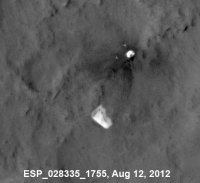
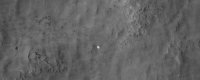
Hier ist noch eine jetzt veröffentlichte Bildsequenz vom Landefallschirm über einen Zeitraum von 5 Monaten:

Parachute flapping in the wind

Image Credit: NASA/JPL-Caltech/Univ. of Arizona
 

Anhänge

  • PIA16813-br.jpg
    PIA16813-br.jpg
    97,1 KB · Aufrufe: 841
Auf zur Bergtour ...

Curiosity is finishing investigations in an area smaller than a football field where it has been working for six months, and it will soon shift to a distance-driving mode headed for an area about 8 kilometers away, at the base of Mount Sharp.

"We don't know when we'll get to Mount Sharp," Erickson said. "This truly is a mission of exploration, so just because our end goal is Mount Sharp doesn't mean we're not going to investigate interesting features along the way."


Sofi auf dem Mars

Sofi auf dem Mars

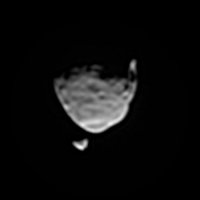
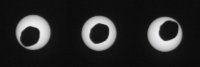
08.28.2013 - Annular Eclipse of the Sun by Phobos, as Seen by Curiosity

This set of three images shows views three seconds apart as the larger of Mars' two moons, Phobos, passed directly in front of the sun as seen by NASA's Mars rover Curiosity. Curiosity photographed this annular, or ring, eclipse with the telephoto-lens camera of the rover's Mast Camera pair (right Mastcam) on Aug. 17, 2013, the 369th Martian day, or sol, of Curiosity's work on Mars.

Curiosity paused during its drive that sol for a set of observations that the camera team carefully calculated to record this celestial event. The rover's observations of Phobos help make researchers' knowledge of the moon's orbit even more precise. Because this eclipse occurred near mid-day at Curiosity's location on Mars, Phobos was nearly overhead, closer to the rover than it would have been earlier in the morning or later in the afternoon. This timing made Phobos' silhouette larger against the sun -- as close to a total eclipse of the sun as is possible from Mars.


Image Credit: NASA/JPL-Caltech/Malin Space Science Systems/Texas A&M Univ.
 

Anhänge

  • PIA17356_transit_trio-br2.jpg
    PIA17356_transit_trio-br2.jpg
    51,1 KB · Aufrufe: 2.098
Re: Sofi auf dem Mars

Hallo,
die Bilder sind einfach phantastisch!
Kannst Du zufällig sagen, in welchem Zeitabstand die einzelnen Aufnahmen gemacht wurden?
 
Re: Sofi auf dem Mars

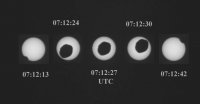
Die ringförmige Phase, in der sich der Umriss von Phobos vollständig innerhalb der Sonnenscheibe befand, dauerte ca. 6 Sekunden. Die partielle Phase, in der sich Phobos ganz oder teilweise vor der Sonnenscheibe befand, dauerte ca. 30 Sekunden.

Raw Images

An annular eclipse on Mars

Image Credit: NASA/JPL-Caltech/Malin Space Science Systems/Texas A&M Univ.
 

Anhänge

  • Martian_Solar_Eclipse.jpg
    Martian_Solar_Eclipse.jpg
    55,9 KB · Aufrufe: 2.006
Keine Spur von Methan

Low Upper Limit to Methane Abundance on Mars

From in situ measurements made by the Tunable Laser Spectrometer (TLS) on Curiosity using a distinctive spectral pattern unique to methane, we here report no detection of atmospheric methane with a measured value of 0.18 ± 0.67 ppbv corresponding to an upper limit of only 1.3 ppbv (95% confidence level) that reduces the probability of current methanogenic microbial activity on Mars, and limits the recent contribution from extraplanetary and geologic sources.

S&T - Methane Goes Missing on Mars

 
Re: Keine Spur von Methan

Vor kurzem habe ich in einem Buch
(ich glaube es war Plaxco + Groß:
Astrobiologie für Einsteiger) gelesen,
dass man aus der auf dem Mars gemessenen
Methanmenge auf einen Maximalwert von
1000 (Tausend) für die dort mögliche
Rinderpopulation schliessen kann.

Ist diese Anzahl mit den neuen Daten
noch zu halten? :gutefrage:

Gruss ;)
Thorsten
 
Re: Keine Spur von Methan

Hallo Thorsten,

ich weiß auch nicht, auf welchem CH4-Wert diese Theorie von den tausend Rindern beruht. Klar ist jedoch, dass teleskopische Spektralmessungen von der Erde in bestimmten Marsregionen wesentlich höhere Messwerte suggeriert hatten:

S&T - November 12, 2004 - Mars Methane Boosts Chances for Life

Using NASA's 3-meter Infrared Telescope Facility atop Mauna Kea, Hawaii, Mumma and his colleagues detected methane at a level of 250 parts per billion in equatorial latitudes north of the Hellas impact basin. Further observations conducted with the 8-meter Gemini South telescope in Chile also revealed elevated methane concentrations over Valles Marineris. The team found methane concentrations of 20 to 60 parts per billion at higher latitudes. These methane concentrations are much higher than those previously reported. In both locations, Mumma's group identified two spectral lines due to methane, which minimizes the possibility of a false detection.

Die Messung vor Ort von Curiosity ist aber sehr viel empfindlicher und konnte trotzdem innerhalb der Fehlergrenzen kein positives Methansignal feststellen: 0,18 ± 0,67 ppbv (Volumenanteile pro 10^9).

Keine Ahnung wie man das in Kuhfladen oder Rinder umrechnet. Auf jeden Fall ist es erst mal ein Dämpfer für die These von den grünen Marsmännchen. Oder die haben einen ganz anderen Metabolismus ...

Gruß, Peter


Status
Es sind keine weiteren Antworten möglich.
Zurück
Oben