Re: Candidate Landing Sites
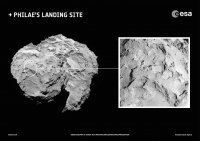
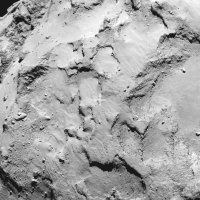
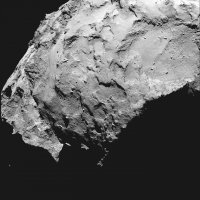
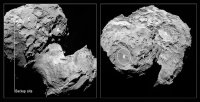
Und hier sind die Textbeschreibungen der fünf Kandidaten:
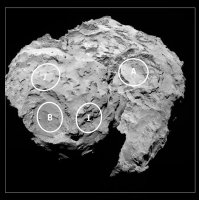
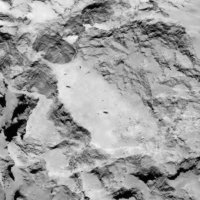
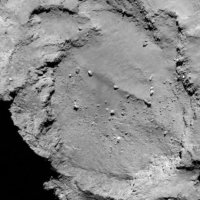
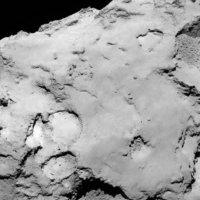
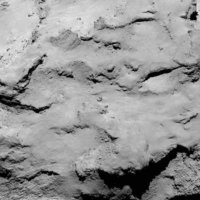
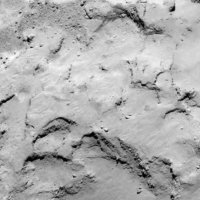
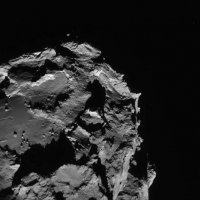
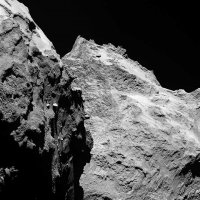
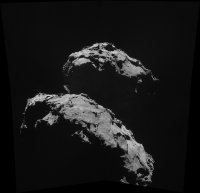
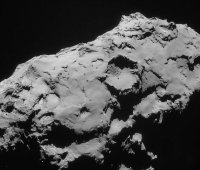
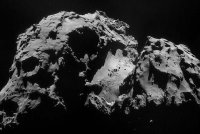
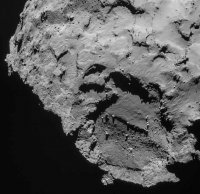
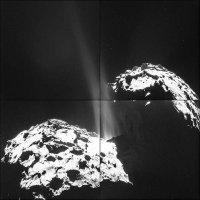
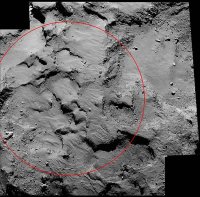
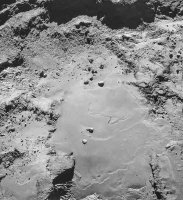
A, which is located on the larger lobe, but in good view of the smaller lobe. The region is interesting because the terrain between the two lobes is likely the source of some outgassing. However, higher-resolution imaging is needed to study potential surface hazards such as small depressions and slopes, while the illumination conditions also need to be considered further.
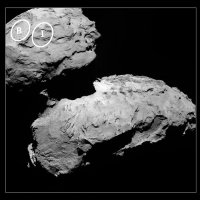
B, which is located within the crater-like structure on the smaller lobe. This site is considered relatively safe for landing given the flat terrain, but illumination conditions may pose a problem when considering the longer-term science planning of the lander. Higher-resolution imaging will be used to assess the boulder hazards in more detail. In addition, the boulders are also thought to represent more recently processed material and therefore this site may not be as pristine as other sites.
C, which is located on the larger lobe of the comet. It hosts a range of surface features including some brighter material, depressions, cliffs, hills and smooth plains, but higher-resolution imaging is needed to assess the risk of some of these features. It is also well illuminated, which would benefit the long-term scientific planning for Philae.
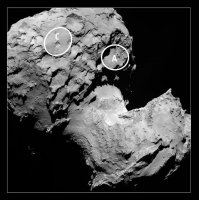
I, which is located on the smaller lobe of the comet. It is a relatively flat area that may contain some fresh material, but higher-resolution imaging is needed to assess the extent of the rough terrain. The illumination conditions would also allow for longer-term science planning.
J, similar to site I, this site also offers interesting surface features and good illumination. It offers advantages for the CONSERT experiment compared with I, but higher-resolution imaging is needed to determine the details of the terrain, which shows some boulders and terracing.
Credits: ESA/Rosetta/MPS for OSIRIS Team MPS/UPD/LAM/IAA/SSO/INTA/UPM/DASP/IDA